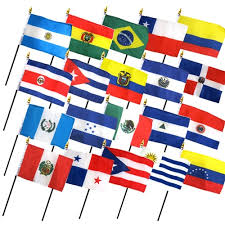
In recent decades Latin America has led in forging alternatives to the global capitalist, imperialist and ecocidal system. New initiatives in grassroots democracy such as participatory budgeting in Brazil; the indigenous communalism of the Zapatistas in Mexico; Hugo Chávez and the Bolivarian revolution in Venezuela; Evo Morales in Bolivia with the concept of rights for Mother Earth (Pachamama); the citizens’ revolution under Rafael Correa in Ecuador which closed the US base at Manta and took the issue of debt exploitation by “vulture funds” to the United Nations; the ALBA* alliance based on fair trade, social justice and environmental sustainability; and the continued resistance of socialist Cuba, These and other Latin American movements of liberation have provided inspiration worldwide.
All of this is now under threat, obviously from Trump’s crude aggression, but before him, a related global right-wing offensive. The key objective of this is Venezuela because of its central role under Chávez (and now Maduro) in promoting a practical economic, social and ultimately political and military alternative, independent of Washington and extending across the region with ALBA and related initiatives.
Also Cuba is always a target for Washington, and Trump reversed the limited improvement in US-Cuba relations that occurred under Obama. But the deep roots of the Cuban revolution and its excellent relations with countries around the world mean Cuba is less of a priority for destabilisation than Venezuela or other countries with progressive governments.
In this context a crucial focus of attention is Brazil. Although due to the strength of the Brazilian industrial and landed elite, the PT (Workers’ Party) governments of Lula (2002-10) and Dilma (2010-16) had not been able to take such radical measures as Venezuela or Bolivia, they did achieve real progress towards social justice and regional independence. It was therefore a major setback, when in August 2016, Dilma was impeached in what amounted to a coup organised by a corrupt Congress and judiciary. The coup president, Michel Temer, whose popularity ratings fluctuate between 2 and 6 %, appointed a cabinet composed of rich white men, reversed all of the PT’s social programmes and opened up the country’s vast resources to global capital on an unprecedented scale. Now, with elections due later this year and Lula the popular favourite to win with a new and more advanced programme, the regime has taken the coup a stage further by arresting Lula and gaoling him for 12 years.
A much smaller country, Honduras, was also the scene of an anti-democratic coup, blatantly manipulated from Washington. Already back in 2009 the progressive president Manuel Zelaya – who led Honduras into the ALBA alliance – had been overthrown in a coup backed by the US and by Hillary Clinton. In the 2017 elections the popular candidate Salvador Nasralla was ahead in the vote count when the count was suddenly suspended for several hours, and when it resumed the right-wing candidate was declared winner. There have been massive popular protests.
Colombia, is significant in a different way, suffering from over 50 years of repressive elite governments and internal conflict. President Juan Manuel Santos, now approaching the end of his second four-year term, made a point of seeking a peaceful solution to the conflict. An agreement was signed last year with the FARC rebels, and talks with the ELN (the second largest rebel group) also seemed to be progressing. Congressional and presidential elections are coming up, and a variety of progressive parties and groups are fielding candidates. But the regime has signally failed to fulfil its side of the peace agreement with the FARC or to curb right-wing paramilitary death squads which continue to murder peaceful social activists. The peace process is in crisis and Colombia continues to act as a US ally threatening neighbouring Venezuela.
To counter this bleak picture, the key ALBA countries of Cuba, Venezuela, Nicaragua and Bolivia are still standing. It is doubtful how much longer the Brazilian regime can resist popular pressure, and there are prospects for progressive election victories in Mexico and Paraguay. Popular resistance, centred in indigenous, black and workers’ movements, is growing. We in Britain have a strong record of solidarity with Cuba, Nicaragua and Venezuela and with Latin American popular struggles, and the Green Party should participate actively in these solidarity movements.
*ALBA is the Bolivarian Alliance for the Peoples of Our America, an initiative of Venezuela under Hugo Chávez. It promotes regional integration with fair trade (not free trade), social justice and environmental sustainability; members include Venezuela, Cuba, Nicaragua, Ecuador, Bolivia and some of the small anglophone Caribbean countries, and it also promotes association between popular organisations throughout the region.
 iecosoc.net
Leave a comment