Given the relatively large size of the nation states France and Spain, the region north of the Ebro and the mountain range of the Pyrenees are generally seen as ‘peripheral’.
A long way from Paris and Madrid.
For centuries, Aragon and Catalonia were joined as one, as were regions on both sides of the eastern Pyrenees.
The word ‘Aragon’ comes from the Basque word for ‘valley’. In Basque, it is called ‘Aragoa’.
The geopolitical matrix of this region has usually been decided by powers to its north and south. The Moors from the south. The Germanic ‘Franks’ from the north.
In the VIII century, Charlemagne set up four militarised buffer zones to guard his south from the powerful Islamic forces controlling much of Iberia. The Marca Hispanica was made up of a mixed population of Visigoths, Franks and Iberians.
By the XII century, Aragon and Catalonia were united – a potent combination of ‘a secure mountain stronghold and a maritime coastline of huge naval and commercial potential’. Able to hold itsown against the rising powers of Portugal and, more importantly, Castile.
A tradition of parliamentary government took off in 1283, in a form of ‘Magna Carta’.
The ‘Corts Catalanes’, assemblies for enacting laws, consisting of three branches, represented the nobility, the Church and the citizens of royal towns.
Roselló was fused into the Aragonese-Catalan combine, as was Valencia to its south. Jewish society flourished in the region, unlike in most of Europe at that time. Especially in the reign of Jaime the Conqueror. Born in Montpellier, he went on to add the Balearic Islands and Valencia to the expanding empire.
Jaime later wrote the Llibre dels Fets or Book of Deeds, an autobiography written in language very close to Occitan (southern ‘France’).
The empire spread to Sicily, southern Italy, Sardinia and even Greece where Athens became a Catalan mini-state in the early XIV century. It possessed rich port cities such as Naples, Valencia andBarcelona.
The Aragonese empire was now “an equal partner in the Iberian conglomerate, controlling a large slice of the Italian peninsula and could exert great influence on the papacy”.
Indeed, the infamous Borgias came from Borja, a town near Zaragoza. Their excesses and scams , especially when Roderick Llançol de Borja got himself elected as Pope Alexander VI, helped sparked the Reformation of Martin Luther. In 1493, Pope Alexander divided up the Americas between Portugal and Spain. Genocide, plunder and slavery blessed by Rome.
The Aragonese-Catalan commercial empire went into decline from the XVI century onwards. Castilian Spain kept it away from the looting and monopoly over America in the West. The Ottoman Turks surged from the east. France grew in strength to the North.
Nevertheless, Aragon hung on to its separate identity. Its Fueros, traditional laws and customs, as well as internal tariffs to protect its commercial sector.
It got enmeshed in the European wars of the Castilian-Habsburg empire. The Spanish wealth from the Americas was wasted on centuries of conflict.
As Spain began its long retreat from the heart of Europe, it doubled down in the Iberian peninsula.
The Catalan Revolt, or Wars of the Reapers, lasted from 1640 to 1652. The catalyst was the presence of Castilian troops – where they forced villages to feed and house them. The unseen factor was the drop in demand by the Chinese for ‘Spanish’ silver. Essentially, the Spanish failed to industrialise or commercialise on the back of the sacking of the Americas. Instead, it engaged in a slash and burn model of extraction of minerals much by slave labour. The Bolivian city of Potosí was the fount of immense quantities of silver, which was exported to China. This revenue kept the military machine and administrative hierarchy going. When the Chinese bought less, Spanish coffers emptied fast.
In any case, the Catalans were joined by the Portuguese. A weakened Madrid had to let one of them go. It decided it could do without Portugal. It held onto Catalonia.
In the Treaty of the Pyrenees of 1659, it was forced to also hand over the northern Catalan regions of Roselló and Cerdanya to France. 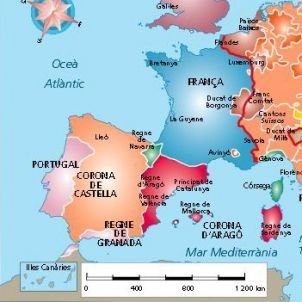
Three centuries later, in 1940, when General Franco went to meet Adolf Hitler in the Basque town of Hendaye, he pleaded with the Fuhrer to let Spain retake Portugal and the French Catalan provinces. The Germans were not impressed. They preferred Vichy France to Fascist Spain bottled up in Iberia.
When unionists today claim that history should be regarded as bygone events, it does no harm to remind ourselves of the expansionist designs prevalent in powerful quarters of the Spanish Deep state.
In 1687, Catalan peasants rose up again in the Revolt of the Barretinas (named after the peasant berets). This time they were joined by the urban areas. The war ended in stalemate in 1697.
The third war from 1700 to 1714 belonged to the continental conflagration of the Wars of the Spanish Succession. Catalans however saw this through a local prism, an opportunity to rise up “in defence of ancient liberties”.
Barcelona was conquered after a brutal siege and fell on September 11, 1714 (hence the annual Diada commemorations on that day).
French and Spanish armies had combined to crush the rebellion. Spain retreated from Europe and secured Iberia for itself (less the British ally that was Portugal).
The French military-duke of Berwick installed a military government, later succeeded by a Spanish Captain-General.
Catalan powers were removed. Autonomy, the Diputación, the Generalitat, the university, the power to print money, the protective tariffs. The Catalan language was banned. Leaders were exiled or executed.
Franco did much the same after winning the Spanish Civil War in 1939.
Today, in the early XXI century, as the coffers emptied in Madrid following the latest economic crisis, a recentralisation drive began.
We find Madrid once again curbing Catalan autonomous powers, removing ‘ancient liberties’, imprisoning leaders.
History rhymes.
Farid Erkizia Bakht
 iecosoc.net
Leave a comment